
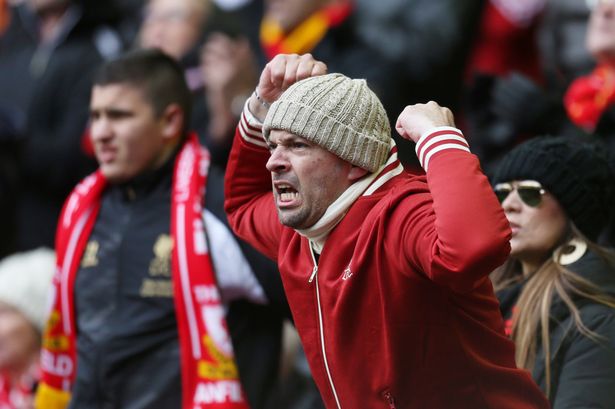
So it looks like Liverpool and Manchester United will be fighting to stay in the Premier League this season. West Ham are gone already. And it’s three titles in a row for mighty Manchester City and their lovely paymasters.
That’s what football social media half suggests, anyway. Regardless of the fact that each team has played a grand total of three games, sweeping conclusions are being leapt to everywhere. Historically, we didn’t even see league tables at this point of the year (and in most years, the season was only just beginning.) We have a ridiculously compressed calendar because of a moronic, money-motivated decision to play the World Cup in Qatar in winter. Even as a fan, I wasn’t quite ready to pitch back in to the hype and madness that is the English Premier League; I am sure players used to easing their way back from the beach about now wish they were still sunbathing.
Football and social media are a terrible combination. Social media requires binary views and simplistic, tribal arguments. Football is basically built on the latter and is increasingly driven by its marketeers towards the former. Messi or Ronaldo? Gerrard or Lampard? Pep or Klopp? The pointless arguments rage to the point where the one you prefer is brilliant beyond reproach and the other a comically overrated spoofer.
Sky Sports remains the premier pusher of the Premier League. In many ways, what they do is brilliant and the likes of BT, the BBC and Johnny-come-latelys Amazon have been left in the dust. Sky has by far the best pundits – Gary Neville and Jamie Carragher remain the prime movers – but has anyone else noticed how shouty they have all become lately? Like every other broadcaster, Sky Sports knows controversy means clicks and clicks may attract new audiences.
So we have the bizarre spectacle of Jamie “look at me when I’m talking to you” Redknapp facing off against Gary Neville over the blame for Man United’s lost decade. We have Roy Keane rants about players being worried about their hairstyles; Graeme Souness telling Emma Carney and others it’s a “man’s game”. All this replayed for clicks and comments on socials. Everyone has to take a side: players and teams are either the best of all time or overpaid flops. This feverish hype generates your social media traffic; you can leave the tiresome “bantz” and tribalism between rival fans to raise the pitch to screeching point.
Last week, Manchester United were down and out after two games, their new manager had failed, or the owners had, or the players had, or something. Argue that out among yourselves, as loudly as possible please. This week, Manchester United beat Liverpool. Now it is Liverpool – who a matter of weeks ago were being lauded as one of the greatest teams of all time – who are in ‘crisis’. Three games, no wins. There is no way they will make up a gargantuan 7-point gap from the remaining 105 points available. Liverpool’s defeat and two draws have taken the heat off not just Man United, but also Chelsea, who slumped to a shock 3-0 at Leeds. Should Liverpool win their next game and Chelsea lose theirs, the knees will jerk towards the Blues. “Fundamental questions” will suddenly need to be asked about what has gone wrong at Stamford Bridge.
For this bonkers agenda to take hold, and for Sky and the many media outlets to maximise interest in their product, every game has to be life or death, critical and consequential. Had VAR done its job at Old Trafford, the second goal may not have counted and the story may be different: how could United turn these improved performances into wins? Questions about Liverpool would remain, partly due to the ridiculous standards they and Man City have set in recent seasons, where the occasional draw has felt akin to a defeat. But the narrative changes with each result. Everything is based on what happened yesterday. Neville is an admirable pundit, but the number of times he has seen the green shoots of recovery at Old Trafford only to denounce the club as falling apart within weeks is extraordinary. Except it’s not, because that is how modern football punditry works – it is all about the last game, the newest signing or the latest social media-friendly rant.
So as heads fall off all over the place, perhaps we’re just better to remember what’s great about football: it’s unpredictable. Sports washing empires and too much money may have made it less so this century, but football is unlike almost any other sport in its capacity to produce surprise results. The best team won’t always win, the best players won’t always perform. Moments of magic, mistakes and madness will continue to impact the outcome. Good footballers won’t become bad and poor football teams won’t become good overnight.
It is not actually possible, in the early stages of a disrupted season, to draw any conclusions about anything (at a similar stage last year, Man City were faltering and Man United were supposedly an emerging force). If everyone could just calm down, wait and see and start to assess the situation around the time we break for this stupidly-timed World Cup, we’d all be better for it – except, perhaps, those whose audiences depend on the whole enterprise being conducted on the edge of hysteria.
*Photo – Daily Mirror
 Rory writes