
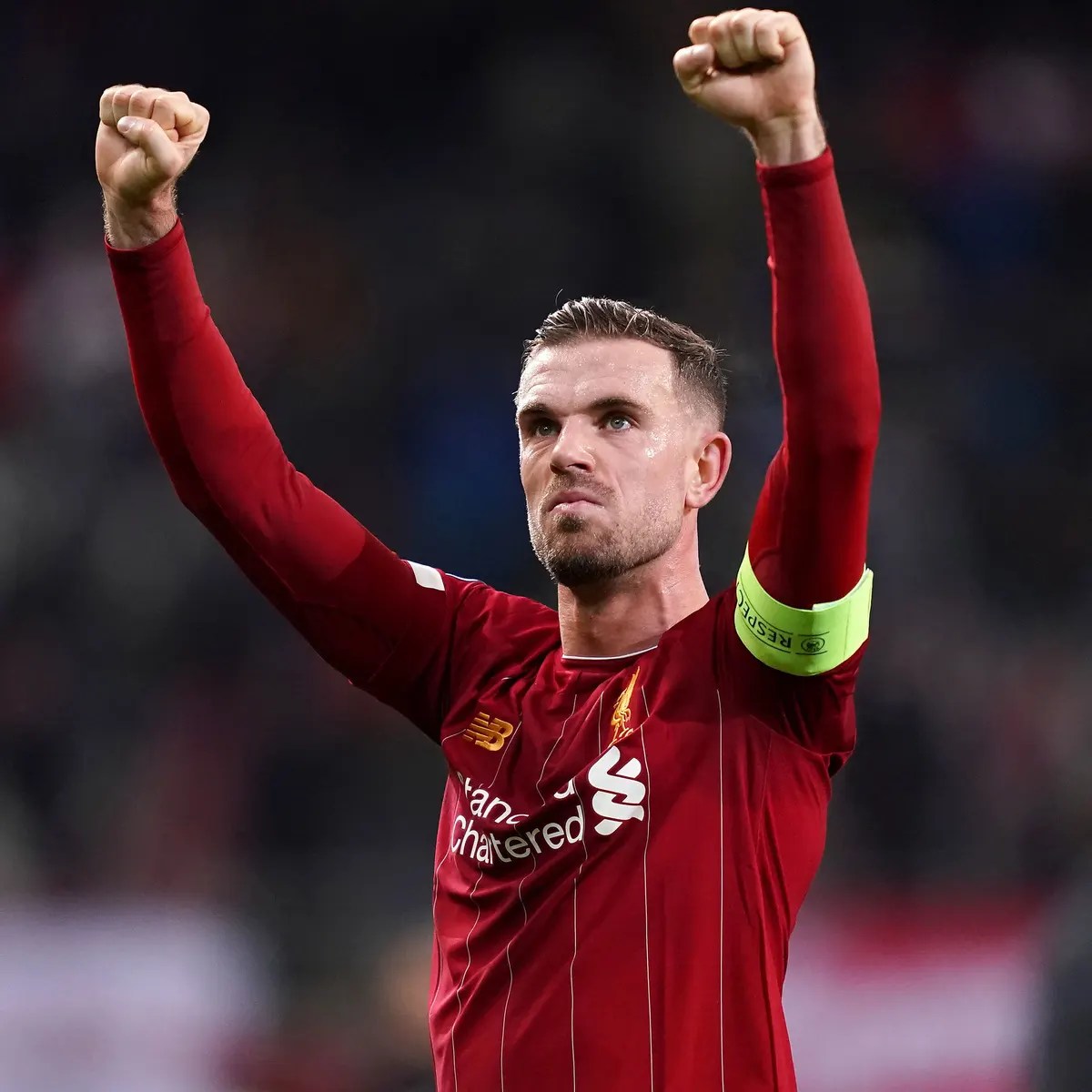
There’s not many footballers I love more than Jordan Henderson. I’ve just finished reading his autobiography and it cemented my admiration for him as a player and a person. As the book almost recognises, he seems destined to be one of those football players who never quite gets the credit he deserves from the football public. But those who have watched him lead a fantastic Liverpool side over the last few years – and seen his vast contribution to their success – know better.
Henderson isn’t a glamorous player. The average fan tends to value the silky skills of a Messi, a Saka or a Salah more than the attributes Jordan Henderson offers. And I’m not for a minute saying he’s better than any of those three. But nor is it as simple as ‘Hendo’ being the player you want to lead a team, lead its pressing and work tirelessly for the cause; leaving the silkier moments to his colleagues. Henderson is a fine passer of the ball, often first time, he can put in great deliveries and he’s scored a few spectacular goals. All of this gets lost because not only is he surrounded by players who are easier on the eye, but also his main job as part of a Jurgen Klopp midfield is to bring energy and drive to the play.
There was one game in the World Cup, I think against Wales, where Henderson had one of his rare stinkers; he gave the ball away a lot and his touch seemed non-existent. Of course this was quickly compiled into the reverse of a YouTube highlights reel by one of those observers who fails to see his merits. He went on to have a great tournament, combining brilliantly with Declan Rice and Jude Bellingham in what is still England’s best midfield three. But in this game, having been out of action for a while and playing in a team whose style is often the antithesis of Klopp’s Liverpool, he misfired, as every player occasionally does.
The thing is, when Henderson misfires, there are always going to be plenty detractors ready to make the make the most of it. Most ‘neutrals’ tend not to admire the boring but important players – have a look at the unbalanced world elevens most people pick. With Henderson, there is also the fact that when he plays badly, Liverpool tend to as well – and for that first half against Wales, England were also pretty poor. His style – often about being first to the ball and playing it quickly – lends itself particularly badly to an off day. The old trope about backwards passing will usually be brought up too – but his job at Liverpool is to recycle possession and move the ball quickly, as well as leading the press. He can play defence-splitting passes with the best of them, but often he gets the ball in a position where that option is not available. Playing in midfield for Jurgen Klopp is not a glamorous task, but it’s crucial to how the team operates.
While Henderson struggled a little in his early years at Liverpool, he was integral to the near miss Premier League title bid in 2014: his red card against Man City with three games left was cited by many as the reason Liverpool didn’t prevail. This is not so far-fetched when you consider how that title was lost: Henderson was largely Gerrard’s legs in his predecessor’s last days, and it’s by no means certain events at Chelsea and against Crystal Palace would have panned out the same way had he been on the pitch. Since then, he has established himself as the captain in succession to Steven Gerrard and led the club to a period of success that was not widely foreseen when he joined them.
Henderson is technically way better than he gets the credit for. He can do everything that is required of a midfielder: he can pass and tackle, win aerial challenges, go past people and he’ll run forever. He can play as a defensive midfielder, but is actually better in the role he played at the World Cup, breaking forward, leading the press and getting into attacking positions where he can provide a threat. His leadership really came to the fore in that strange Covid period of empty grounds; it became clear that he talked and led his team mates through every 90 minutes. Klopp and others have also praised his influence off the pitch: in Liverpool’s most successful period for decades, his captaincy has been crucial.
Speaking of off the pitch, his values are also exemplary: he led the #playerstogether fundraising efforts to support the wellbeing of health workers during the pandemic, he has spoken out against racism and homophobia and he recently led the move by Premier League captains and players to support Gary Lineker when he was suspended by the BBC. Like Marcus Rashford and many other modern footballers, Henderson takes a real interest in issues of social justice and fairness. It is easy to say that he does so from a position of privilege – equally easy to counter that he has no need whatsoever to get involved in any of it, but chooses to do so of his own volition.
Reading his book, you get the impression his whole career has been a fight against the odds, against the critics who said he’d never become what he has. From Alex Ferguson criticising his running style to Brendan Rodgers trying to swap him for the mediocre Clint Dempsey – via a whole load of snide social media posts, some from people purporting to be Liverpool fans – it’s been a challenge to prove people wrong. He’s done it in style: he was Footballer of the Year the season Liverpool ended their 30-year title drought and he has won every club trophy he has competed for over the last few years.
Henderson himself says with typical modesty that Liverpool would have won all of those trophies without him. I actually doubt that. Not only has he been a key player, his leadership and will to win have been critical components of the whole thing. Van Dijk, Salah, Alisson and Mane may have made more spectacular impacts, but Liverpool’s record has consistently been better with Henderson in the team than without him. Damien Comolli, who helped sign him for the club, does not think they would have won what they have without him. https://www.sportbible.com/football/liverpool-would-not-have-won-premier-league-without-jordan-henderson-20220306
Like Jamie Carragher before him, Henderson is one of those players who has maximised his talents to such a degree that he made himself indispensable to a side packed with more generational players. It might well be that at 32, and with a playing style based on boundless energy, his days as an automatic starter are at an end – and we can already see the challenges that is presenting to a Liverpool team suddenly lacking that ‘heavy metal’ identity. There will be a rebuild and Henderson’s future role may be more of a bit part one like that now played by James Milner. But what nobody should doubt is his vast contribution over the last decade – or how difficult he will be to replace.
 Rory writes
One thought on “And here’s to you, Jordan Henderson…”