When did ageing rockers become cool?

It was once a trope of rock n roll that ageing pop stars should have called it a day long before they started to go grey, lose their voice and run out of ideas. Pop music, after all, pretty much invented the generation gap in the latter half of the 20th century. From outrage at
Elvis’s wiggling hips, to shock at the Beatles’ long hair, Bowie’s androgyny or
Madonna’s wardrobe, the ‘olds’ just didn’t get our music. (My mum dismissed
much of it as ‘just a noise’.) And the last thing we wanted to see was our rock
stars starting to resemble our mums and dads. There’s many a brickbat come the
way of old rockers either churning out old hits or trying to remain relevant
with a new album that just evidenced their waning powers.

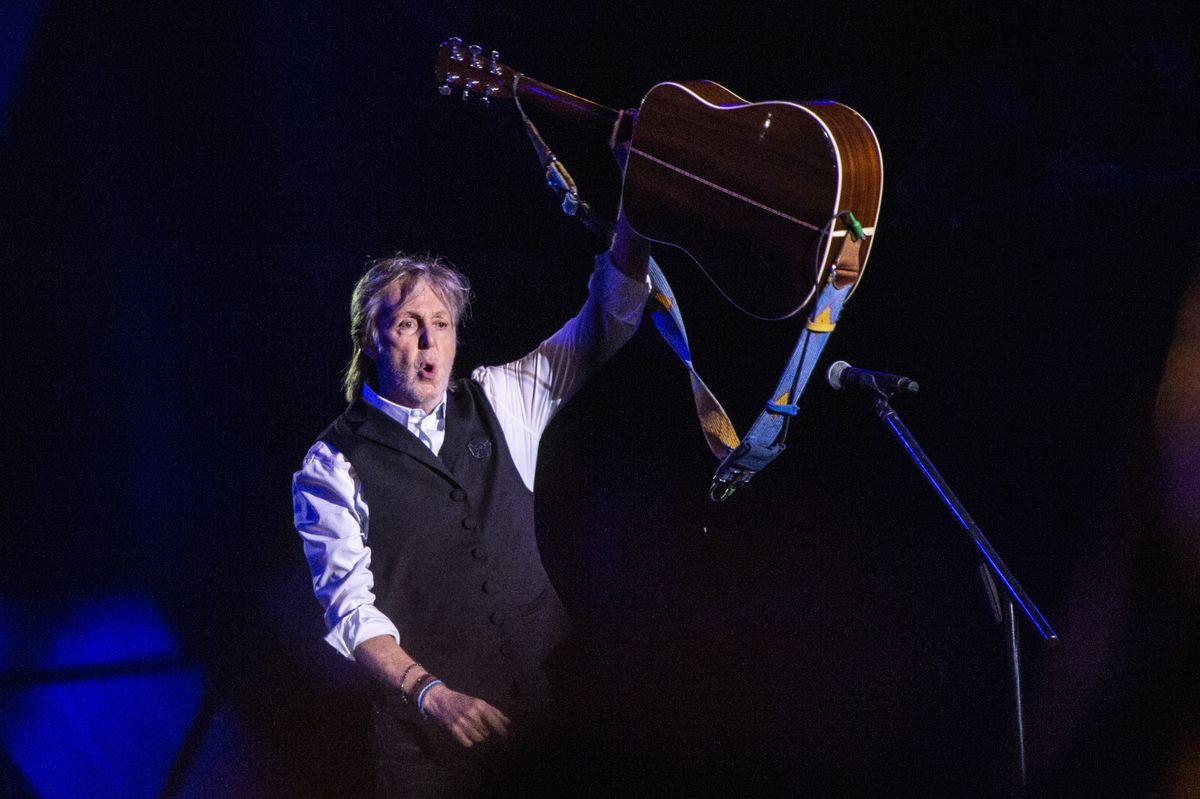
This has changed in the 21st century. The idea of Paul McCartney headlining Glastonbury at 80 would once have been laughed out of existence – this was a man, after all, who had foreseen a life of pipe and slippers when he was 64. Joining him on stage were 72-year old Bruce Springsteen and young pup Dave Grohl, 53. Supporting was Noel Gallagher, another man in his 50s whose pomp was nearly 30 years ago. And the crowd – a mix of ages, and in fairness not as young as those cheering on Billie Eilish the night before – lapped it all up with absolute glee. Gallagher remarked afterwards that for kids to still be singing along to Oasis songs two generations down the line is amazing to him. And McCartney, even with his voice failing, was getting rave reviews for an epic set that will go down as one of the great Glastonbury performances.

There is a school of thought which suggests that rock n roll itself got old, so the popularity of old acts churning out familiar tunes should not surprise us. Rock music has been surpassed as the primary form of pop by Hip Hop and R&B. The average 18 year old can’t bunk in to
Glastonbury as our generation did, because it’s now a massive corporate event
and the gaps in the fences have long since been plugged – so the organisers aim
for an older, more affluent audience. 

These points have some merit, of course -indeed, the decline of rock n roll sometimes threatens to create a new generation gap with middle aged moaners making ‘hilarious’ jokes about putting a ‘c’ in front of rap or just not ‘getting’ the music their kids like. But the
reality is that new music always came along and some of us always actively sought it out – and still do. And meanwhile, a lot of younger listeners appear to love music as ancient as The Beatles, several generations of teens since Beatlemania. My 15 year old has eclectic taste: Taylor Swift and Olivia Rodrigo are joined by Artic Monkeys, Oasis, Bowie and yes, The Beatles, on her playlists.

Perhaps new found credibility of ageing rock stars owes most to the fact that so many of them have turned out critically acclaimed albums in the 21st century. David Bowie said many years before his spectacular renaissance that at some point, an older act was going to produce a brilliant album and he hoped it would be him. Well, it wasn’t just him: McCartney, Bowie, Springsteen, Bob Dylan, Tom Waits and Leonard Cohen have all produced material
in the last decade or so to compete with their best years. Gallagher joked on the Glastonbury stage that he knew people weren’t there to hear his High Flying Birds output, but it’s actually massively underrated. Rock music may not be as dominant, but it’s part of the cultural furniture: old stagers who are experts in their craft and are still open to new ideas suddenly feel relevant again.

The ageing rocker stereotype arguably gained real strength from the sad images of an ageing Elvis stumbling and muttering through live sets in the 70s; perhaps the many young deaths of pop stars still seemingly at the peak of their powers helped in a way too. Pop careers were once automatically considered brief. The Sex Pistols had only one proper album, Amy Winehouse only two: the idea of the young star who burns brightly and briefly before crashing has always had its tragic appeal. There is also certainly an appetite among middle aged fans to see iconic acts because ‘it may be the last time’ – and the word is that the Rolling Stones and Elton John have been putting on shows to remember on their current tours. Virtually every 80s band I grew up with seems to be touring these days too. Nostalgia is certainly a part of the attraction.

Some will argue that young people don’t listen to music anymore, or at least not in the same way. Technology plays a part. The advent of streaming and songs being popularised through Tik Toks, Netflix dramas and ads – has accelerated a trend where some younger audiences were more likely to love individual tunes than artists. The popularity of You Tubers, Tik Tokkers and gamers as ‘influencers’ takes some of that space away from musicians. And modern music production can hide a failing voice or fading musicianship (witness Liam Gallagher singing live now as opposed to on record). But tech and changing tends are not the whole story: people will always love music. If anything there is less of a generation gap on music now that at any time since rock n roll emerged in the 1950s.

That, I think, is the real change. Pop music is no longer just a thing for young people. There isn’t an older generation dismissing it as ‘noise’, its shock value long since disappeared and now it just ‘is’ – in its many different genres. The icons are no longer derided but celebrated, a man my age can enjoy nostalgia for great tunes of the past while continuing to seek out and enjoy new music. I think we’re all better for it.

Macca, best of the Beatles

Paul McCartney is 80. Really. A man who helped invent youth culture and the generation gap is now an octogenarian. And he’s still making decent albums and touring.

Who is the greatest, Lennon or McCartney? It’s almost a debate not worth having. The world was lucky that two such magnificent song writers coincided in the same city at the same time; together they would transform music and popular culture and leave us with songs that continue to defy time and span generations.

But if you push me – like really push me on this impossible question – I’m coming down on the side of Macca. Lennon was cooler, funnier, wilder and, in the Beatles era at least, arguably the more innovative. He died younger (exactly half Paul’s age now) in tragic and violent circumstances and that helped his legend. But McCartney just had tunes, he constructed melodies from nowhere that you felt had always been there – famously, even he thought the tune he woke up singing that became Yesterday was someone else’s, but he couldn’t remember who. There is an amazing sequence in the Get Back movie where they are struggling for material and he literally sits down and writes three timeless classics – Let It Be, The Long and Winding Road and Golden Slumbers in like a day. Their back catalogues are a close run thing, but among Paul’s greatest Beatles moments are many of music’s: Eleanor Rigby, Fool on The Hill, Hey Jude, For No-one, Get Back, Paperback Writer, She’s Leaving Home, Blackbird, Penny Lane, Here There and Everywhere, Back In The USSR are all his. And while much is made of the Lennon-McCartney partnership and the whole band chipped in to the process, they generally wrote solo after their earliest material. All those classics are Paul McCartney’s work.

There’s a view in some circles that Lennon’s post-Beatles output is better: I disagree. He wrote some absolute belters, the Imagine album is magnificent and Working Class Hero, Jealous Guy and Give Peace A Chance are all great. I like his last album, Double Fantasy, more than the critics who hastily revised their opinions after his death. And his death unquestionably impacts this debate – Paul continued to make records for another 40 years, so has much more material. People can point to the frog chorus and some of his more forgettable tunes in that period, but there’s a great body of McCartney work after the Beatles. The Ram album (also widely criticised at the time) has come to be seen as the template for indie pop, Live and Let Die is by far the best Bond theme and Band On The Run, Jet and Silly Love Songs are great. Calico Skies is as lovely a love song as you will ever hear. Maybe I’m Amazed is as good as anything he ever wrote. And if you want innvovation, have a listen to his experimental recordings as part of The Fireman. His collaborations with Elvis Costello and to a degree Michael Jackson unearthed some gems and recent material like Egypt Station and McCartney III are worthy of anything else in his canon. People can diss Mull of Kintyre and Ebony and Ivory if they wish, but they were hugely popular. Like I say, one thing Paul has always had is tunes.

McCartney the man passes the ‘would go for a pint with’ test too. He stayed in the UK to pay his taxes, sent his kids to local comps and has always come over as down to earth and essentially decent. We might have seen him closing one too many national jamborees, but that’s because he remains the godfather of modern British pop. When we lose him, his genius will be celebrated, indeed it is encouraging to see it increasingly celebrated now.

Without Paul McCartney, we would not have modern pop music as it is. So many of the tropes, both musical and behavioural, were created by the Beatles. For him to still be going strong at 80, still putting out fine and memorable tunes, is a tribute to a generational talent. Lennon was a generational talent too, Harrison is maybe the most underrated songwriter ever and Ringo was a fabulous drummer, We were lucky to have them all – but if I choose one, then with difficulty, I choose Paul.

The transfer window: a party for football’s most tiresome fans

It’s that time of year again. No football at weekends, no World Cup or Euros to distract us. It’s doubly annoying this year because there would be a World Cup but for an inane, financially driven decision to move it to Qatar in the winter – and because we are being subjected to another round of pointless international friendlies nobody cares about masquerading as a competition.

While football-free weekends are frankly weird, they do have their advantages. The truth is I sometimes wish I didn’t care so much about the stupid game and its absence is enormously helpful to family life as my schedule is suddenly way more flexible. Unfortunately, the lack of football is no longer replaced by cricket, Wimbledon or barbecues in the attention spans of many football supporters and journalists: into the void sails the hellish hysteria of the transfer window. While sports washing, resurgent hooliganism, VAR and silly tribalism may take the Champions League places for ‘worst things about modern football’, the transfer window is a strong Europa League contender with a good chance in the cups.

Once upon a time, we vaguely followed transfer speculation on the back pages – now, social media and 24 hour sports news have made the transfer window a kind of party for all the most tiresome football followers. Continuing the theme, the Champions League places go the following.

ITKs. ‘In the knows’. Twitter in particular is full of people who reckon to have ‘inside information’ about transfers. The likelihood of some average bloke on social media knowing more than journalists whose job it is to build relationships with players and agents is roughly nil, but it doesn’t stop people setting up accounts claiming to know what’s going on – in some cases building legions of gullible followers. A classic M.O. is to throw out lots of speculation as fact, get lucky once or twice with guesses and then build an army of true believers. These weirdos tweet ‘BREAKING NEWS’ as if they were the BBC, or ‘DONE DEAL’ about transfers that may or may not happen but are certainly not confirmed, and the daft and desperate suck it up. New accounts appear every window, some even claiming to be football agents. Yes, likes and follows matter that much to some strange men.

Desperado fans. The deluded come in various guises – those following the ITKs, those continually asking journalists for updates or tweeting ‘announce (player)’ every time their club posts something. But the worst ones are those who seem to genuinely care more about transfers than they do about their team’s results. I’ve lost count of the number of transfer windows Everton have ‘won’ since they last won an actual trophy in 1995, and last year we were told that Manchester United’s signings of Ronaldo, Sancho and Varane made them title contenders (how’d that work out?). Incredibly, the early part of the season even sees ‘fans’ who think the world is like Football Manager or FIFA almost celebrating any bad results for their team, so they can castigate the owners for lacking the ‘ambition’ of state-sponsored clubs like Manchester City. Being right matters most and the world is like Football Manager, you buy and sell 5 or 6 players every summer and ‘upgrade’ anyone over 30…though it’s hard to remember an actual team in real life doing that and being successful. Mate, I know you took Peterborough to European glory in a computer game but – and I know this is hard to believe – it was just a computer game.

‘Bantz’ bros. Fans can covet players consistently from other teams for months or even years – but the minute he joins a rival, he’s absolutely rubbish, they have overpaid laughably and he is going to be a gigantic flop. This mentality leads to long, fruitless and circular arguments bringing in everything from comparative club histories to disputed refereeing decisions – but essentially, it’s the sort of half-witted, one-eyed tribalism that a six year old should be ashamed of.

Amateur accountants. A major sub-category of the deluded are those who add up reported transfer fees, subtract outgoings from incomings and come up with a ‘net’ figure that takes no account of salaries, existing wage bills and bonuses, global pandemics or anything other than their desire for their team to buy more and more footballers. To see them pricing up players they clearly think are useless for billions while wanting to buy world class players for peanuts is pretty much the opening salvo of the whole madness. Net spend – the amount a club generates in transfer fees being subtracted from its spending – has a certain logic. But unless you’re the club accountant, you don’t actually know what the financial position is or how much they can afford in transfers – and unless you have a sugar daddy or oil rich state for owners, it’s not going to be anything like what you spend in your favourite computer game. Special mention here for those who condemn teams like Man City and PSG for their ownership models but would celebrate Darth Vader buying their own club if he had those kind of resources.

Football twitter can be silly at the best of times, but at this time of year, it descends in to a kind of collective madness. The bottom line: clubs will spend what they can afford, players don’t feel the same way about football clubs as fans do, nobody knows at this stage whether a given transfer will work out. All the rest is irritating, tiresome, often moronic noise.

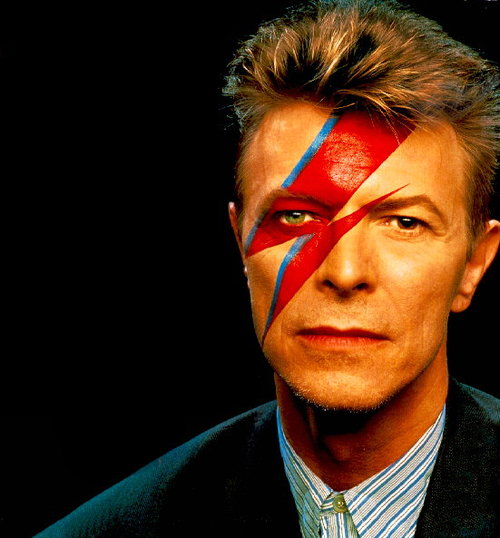
Bowie: just better than everyone else

Everyone has their own taste, their own likes and dislikes. Music is a hugely varied form and what we love or hate or don’t really get is entirely personal. All that said, can we all just agree on one thing: David Bowie is without parallel, an absolute genius who is just a little bit better than anyone else?

I went through my first Bowie phase at about 16 and never really came out of it. I’d liked everything of his that I’d heard – as a kid, Life On Mars was the first song to give me those chills that music can send through your body – but it was listening to the Ziggy Stardust album that really blew me away. It opened me up to different kinds of music and to what music could really be. Ziggy remains my favourite ever album. I love the way it seems to suggest a story, Five Years to Rock n Roll Suicide, the perfect songs, that iconic early Bowie vocal. And that last song, Rock n Roll Suicide – that ending, goodness me, I didn’t know music could do this. ‘Oh no, Love, you’re not alone!’ – just what every teen needs to hear – and Bowie’s Messianic screams of ‘Give me your hands’…like he was reaching out of the record to me. It sent tingles through my spine, my brain, my very self. I played that album constantly and it still endures today. It changed how I saw music – and by doing that, it changed my life.

Bowie’s back catalogue became an obsession. There was no Spotify, no internet and in my case, not much money to buy records, which was the only way to hear them. From birthday to birthday, I gradually bought the lot. I started with Diamond Dogs, an album a lad at school had played while babysitting and turned off because it scared. him. Again it felt like a story, a post-apocalyptic nightmare world. Sweet Thing/Candidate, one of Bowie’s least heard, most remarkable tunes, is its centrepiece, Rebel Rebel its enduring smash hit. Hunky Dory, which many cite as their favourite, just a brilliant collection of iconic songs. Aladdin Sane, the perfect Ziggy Album after Ziggy, the sweeping heavy rock meets peculiar ballads of The Man Who Sold The World. Space Oddity or David Bowie – whatever you call his first record after his novelty pop debut – such a clear prognosis of the brilliance to come and including another little heard classic in the epic Cygnet Committee.

Early Bowie was my thing now. I was almost dismissive of Let’s Dance, his most successful album, as were many Bowie fans at the time. I listen to it now and am bewildered by that indifference; it’s a fabulous album – but my view was not uncommon. But I think my view of Let’s Dance changed not just with maturity, but with hearing the massive section of Bowie’s collection that I had not yet caught up with.

It’s from the mid to late 70s that the Bowie story takes an incredible turn. Here is a man who has invented glam, changed fashion, influenced social mores and turned out a series of albums that would cement his legacy as one of the all time greats. But in 1975, Young Americans saw his first, remarkable reinvention. No longer the weird red mullet and glam rock tunes; suddenly Bowie’s voice went several octaves deeper and he started turning out white soul music. It was not just any soul music either, as with any genre he accosted, it had a distinct Bowie tinge. From there to the inestimable Station to Station, which built on its predecessor and slightly foreshadowed the Berlin trilogy to come – six sweeping rock/soul tunes that legend has it was put together on a diet largely made up of milk and cocaine.

Bowie was wasting away and going slightly nuts, saying bizarre things in interviews about Hitler and looking more like an alien than ever – perfectly cast in The Man Who Fell to Earth. He retreated to Berlin, where he and his friend Iggy Pop tried to pull themselves together. The Berlin trilogy would follow – and Low, the first of the three, was a seismic shock to his record company. This was an entirely different Bowie again – while the first side was a series of short vignettes reminiscent in some ways of Station to Station, the second was almost entirely instrumental. The keyboard-heavy compositions, the phonetics instead of words – you can imagine what marketeers used to hit records like Starman and Space Oddity thought. Low is another album that changed music forever, it was reportedly the inspiration for Joy Division ( initially named Warzawa after a Low track) and for a whole genre of electronic music. Heroes followed in a similar vein; the second side largely instrumental ambience, the first a collection of great electronic rock songs, including the stupendous title track. Then came Lodger; the last of the trilogy was different again, experimental in a different way as Bowie tried different styles, but still able to produce the perfect pop of Boys Keep Swinging.

Scary Monsters is so good that ‘best Bowie album since Scary Monsters‘ became a thing in the following years where some detected a decline. A clear precursor to the 80s new romantic scene, even featuring some of its early fashionistas in the Ashes to Ashes video, Scary Monsters is up there with Bowie’s greatest material and sparked a new string of hit singles. Let’s Dance, on which Bowie worked with the legendary Nile Rogers, would follow, a massive international success which, as alluded to earlier, initially divided some of the fanbase.

That catalogue up to 1983 is just unbeatable and for a long time, the later years were somewhat dismissed. Certainly the two further 80s albums, Tonight and Never Let Me Down, are somewhat forgettable, but every Bowie album has a gem or two. Blue Jean and Time Will Crawl, for example, are great Bowie songs. And one-off single Absolute Beginners is magnificent.

Moving in to the 90s and out of what Bowie later derided as his ‘Phil Collins phase’, Black Tie White Noise is not quite the return to form that some claim and The Buddha of Suburbia (only recently counted among the studio albums) is interesting but uneven. The real return to form came with Outside in 1995, a dark album about an ‘art crime’ murder which risks being derailed by some weird spoken segments, but shows there is plenty left in the Bowie tank. Then came Earthling, his take on drum and bass which is a surprising success. 1999’s Hours rounds off Bowie’s decade nicely with a strong collection of songs. Bowie was writing good songs and albums again now, though he had become a more marginal figure and his releases were not quite the events they had been in the past. He remained a cultural icon and his predictions about the potential power and dangers of the internet would be reprised in later years as evidence of his deep wisdom and foresight. His musical recovery is built on by the acclaimed 2002 album Heathen and its more mixed successor Reality.

A heart attack which ended a gig in 2004 would see the end of Bowie’s tours and, it seemed for a while, his whole musical career. He simply disappeared. Fans seemed to have been left with a legacy of his great, era-defining music, with his ‘greatest hits’ tour of 2000 and, quite honestly, that would have been more than enough. His sudden re-emergence in 2013, ten years after Reality, stunned both the media and his fanbase. Where Are We Now?, the gorgeous single, rocketed to the top of playlists and the subsequent album The Next Day is right up with his very best. Suddenly, Bowie was centre stage again, though he remained elusive, not giving interviews and just letting his music speak for him.

We didn’t know that Blackstar would be his farewell. Bowie did. He admitted as much to his friend and producer Tony Visconti – who he had confided in about his terminal illness. Blackstar is another astonishing departure, it sounds like nothing else, taking in jazz, hip hop and electronic influences and fusing them in to a Bowie classic. And the lyrics – man, some of the lyrics will break your heart. The title track, Lazarus and Dollar Days (‘If I never see the English evergreens I’m running to…’) in particular. Those last two Bowie albums are incredible, an ageing and then dying artist returning to his absolute pomp.

Bowie’s death in 2016 impacted me more – way, way more – than any celebrity death. It felt like losing someone close to you, even though I know that makes little sense. But when you have listened to someone’s music so closely over so many years, admired them above almost anyone else – their departure does hurt. He went out in a blaze of brilliance; even his end felt choreographed. A world without David Bowie is just a lesser place.

Every so often , I go through a phase of listening to Bowie and nothing else. When I do, it just confirms that – to me – there is nobody better. I have eclectic musical taste and tend to have phases of playing particular genres. But Bowie is his own genre; he spanned many different ones but when I listen to him now, it all hangs together as uniquely him. This was a man who not only wrote great songs and fantastic albums; he also designed his own sets, album sleeves and clothes. He almost single handedly introduced the idea of conceptual art to pop; he was the first pop star to switch genres and image at will; he popularised arguments about sexuality and gender long before they were fashionable. That iconic Top of the Pops appearance with his arm on Mick Ronson’s shoulder, the wearing of a dress on the original cover of The Man Who Sold The World – Bowie was always a transgressor, a disrupter ahead of his time. His ability to tune in to the zeitgeist, to lift from what was not just popular but emerging and make it his own, is without precedent.

And, good God, he wrote some incredible tunes.

Why do we need to know what music you hate?

There’s an awful lot of awful things happening. War in Ukraine, emerging environmental catastrophe, democracy itself facing multiple threats in the era of post-truth politics. The horror of the global Covid pandemic has not gone away. We have so much on our plates. But perhaps what we really should be focusing on is why you really hate a particular band, singer or musical genre?

Why do people feel the need to share this? Why is it important to announce to the world that you don’t like Coldplay, Harry Styles, the Beatles or whoever? And not just announce it, but go on and on and on about it and actually spend time arguing with others about the relative merits of things that rather obviously come down to personal taste?

Perhaps on this I’m akin to a reformed smoker complaining about cigarette smoke. I grew up loudly denouncing any form of music I didn’t love. It felt like we all did. I was a teen in the tail end of the short-lived punk era, when it was de rigueur to slag off everything that had been before (even if punk borrowed very heavily from much of it). We hated prog rock, we hated the sixties, above all we hated disco. Anything that resembled pop was utterly derided – ABBA’s catchy tunes were an insult to the ears, and as we moved in to the 80s, that detestation would switch to Wham! and anyone else who wrote feelgood pop songs. Popular music – and much of popular TV and film – was an abomination to our sensitive souls. And not just sensitive. We were cool.

Yes, the desire to be cool, to like things that were rated by the most discerning critics, to swim against the mainstream. That is what drove so much of this attitude and still does. “I preferred their early stuff” was the stock response to anyone who became popular, because widespread popularity instantly shredded cool in our minds. We still see it today – I look at some of the album polls on indie Twitter and it feels like a competition to name the most obscure act or album. Not denigrating their choices – but listening to things no-one else does doesn’t mean you have elevated taste. It might even mean you haven’t quite shredded the teenage desire to be one of the cool kids.

None of this is to say that some music isn’t better than other music. To my mind, David Bowie is better than everyone and the Beatles’ enduring popularity is no surprise. I love a wide variety of acts that I won’t list here. I have come around over the years to good pop music (I suspect I was always pretending to hate Abba and Wham!, as who could, really?) and having a teen daughter has made me appreciate people like Taylor Swift and Billie Eilish, who I once would not have given time of day to. There is also loads of music I don’t care for at all and lots that I actively dislike. But that’s just me; my ears, my taste, my likes and dislikes. I’ll write some more here about my likes and may even try to convince you that Bowie is untouchable, but I’m not going to spend one second trying to convince you that you shouldn’t like the music that you do.

It’s goes further than lambasting the poppiest pop, of course. The other day I saw a poll for ‘worst band ever’ that included such luminaries as Radiohead and U2. Oasis had the shortest journey from being the epitome of cool to the band it was cool to hate. I suspect their success was a bigger factor in that than their music: in their pomp they were a great band who provided a soundtrack to the mid-90s. But then what happened to them was only what they once did to the supposedly terminally uncool Phil Collins. Being hugely successful is the surest way to put a target on your back for the cool kids to aim at, or gaze disparagingly at, at least.

When I grew up about music, stopped pretending to be cool (I never was), stopped pretending to like what I should and hate what was popular – my tastes became much more eclectic and I stopped getting cross about things other people enjoyed. There are still things I’d hear and think why on earth do people like this?, but that’s fine. If I don’t like it, it’s not for me.

It would be cool – in the true sense of the word, not the try-hard one – if we could all just agree on that.

VAR: the epitome of joyless officialdom

I am deliberately writing this ahead of the biggest Premier League game in a couple of years, with Liverpool going to Manchester City on Sunday in a much-vaunted ‘title decider’. (I don’t think it will decide the title, but it will certainly have an impact.) I might or might not anticipate Anthony Taylor making a very contentious decision on the dubious advice of Paul Tierney, but it’s better to consider the merits or otherwise of video assistant referees (VAR) in the cold light of day than in a post-match rage.

Like a lot of people, I was strongly in favour of VAR when it was introduced. I had seen too many appalling decisions decide football matches, the goal line technology had already been a successful innovation and we had seen technology used effectively in sports like cricket and tennis. Who could object to referees having the benefit of slow motion replays to decide whether there had been a foul or an offside? While some things may still be open to interpretation, the rules only corrected ‘clear and obvious’ errors. meaning, surely, that the real travesties would become a thing of the past and we could go back to talking about the game, not the officials?

It hasn’t quite worked out like that. If anything, in the English Premier League at least, VAR has shone a light on a level of refereeing incompetence that we perhaps always suspected, and made the ineptitude of most of our officials very clear and obvious. If someone who is paid to officiate football matches can’t see, with the benefit of replays from all angles, what is blatantly obvious to most people watching, then they are in the wrong job. But again and again, this has happened. I’m not going to list examples here – most of mine probably relate to my own team and you’ll have your own grievances. But it’s incredible how often pundits end up talking about poor decisions made with the benefit of VAR. This is less the case in European or international games, so does sadly reflect that most of our refs are way below par.

“Don’t blame the tech, blame the officials’ is a regular and in some ways justifiable response. If we don’t get as many appalling decisions from overseas refs, isn’t it time to put our house in order, get rid of the worst offenders and maybe import better officials as we have with players? All true. But that doesn’t take away an even bigger gripe.

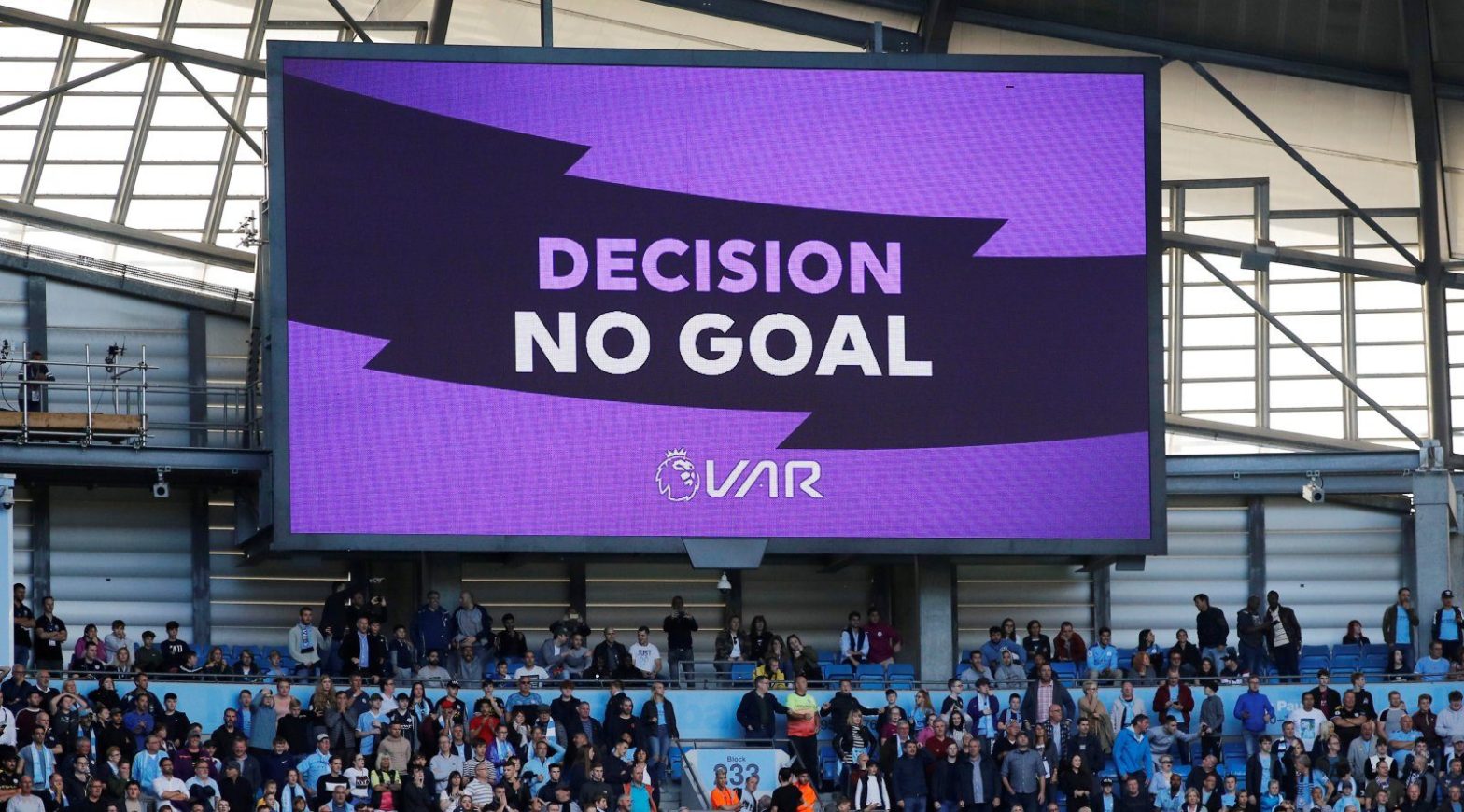
The worst thing about VAR is not even the embarrassingly bad decisions our referees are making with the benefit of replays. The worst thing is the effect on the spectator experience. Long delays while they look at every angle or the referee goes over to the pitchside monitor are one frustration. Refusal to flag obvious offsides as a when they happen is universally detested (and will sooner or later lead to an injury and a change to a rule we all hate). But the biggest travesty is the impact on the best moments in football: your team scoring a goal.

This is much more compelling case against VAR than rubbish refs. When a goal goes in now, you can’t celebrate, at least not in the way you once did. I know disallowed goals are not new. But we all got used to looking quickly for a linesman’s flag, or the ref pointing to the centre circle, on our way up out of our seats. Now there might be another intervention, maybe going back to a foul in the build up to the goal, or a fraction of body hair being offside. This makes that explosion of joy at a goal, especially an important one, far less likely. Part of you is already trying to second guess the half competent guy watching the game and looking for a reason to rule the goal out.

On this basis alone, VAR everywhere is a failure. I’d take the odd marginal offside, push in the back or whatever in return for the joy of the goal. If play hasn’t been stopped at the time, raking back over what the players were doing last week to try to disallow the goal is the epitome of joyless officialdom.

Football is a simple game – anyone can play it in a park if they have a ball or something passing for one. It’s already being over-complicated by bizarre rule changes, money-driven changes to the formats of much-loved competitions and sports-washing owners with bottomless funds undermining its competitiveness. I don’t think the addition of another variable like VAR – whether or not it is made worse by inept application – has in any way enhanced football as a sport. There may be a marginal improvement in decisions – even that is debatable in England – but what’s been lost outweighs any perceived gain: the most exciting part of the game for fans has been fatally undermined.

It’s time to VAR the whole VAR concept. Decision: failure.

Unconscious bias? Watching sport with my Dad

My dad didn’t care who won. “I just want to see a good game.” France were playing Germany in what would turn in to an iconic world cup semi final, a 3-3 draw and the inevitable German victory on penalties. Yes, that game, with the Schumacher assault on Battiston that is still talked about today.

I did care. I wanted France to win, or more precisely I wanted Germany to lose. German teams of that era were annoying, they seemed to master the art of getting through to finals and semi finals without playing particularly well, they didn’t provide the thrills of a Brazil, Argentina or indeed France team. This French team had grown in to the tournament after losing their first game 3-1 to England, they were great to watch and I suspect most neutrals favoured them. But not the ‘neutral’ who was watching with me.

My Dad had this way of watching sport that was a heady mix of hilarious, combustible and infuriating. I owe my love of Liverpool FC to him, he took me to games at Anfield and actively encouraged my support – like many Irishmen, he had a liking for the city. But being a contrary soul, he then took it upon himself to be anti-Liverpool when we watched them, calling every decision – sometimes laughably – against them and telling me repeatedly “You’re biazed” – his bizarre pronunciation of the word ‘biased’ only adding to my irritation. He just wanted to see a good game; he wanted Liverpool to win, of course he did, but you had to ‘see both sides’. If people think Martin Tyler is biased against Liverpool, they should have sat through 90 minutes with one of their alleged fans.

So as with Liverpool, he just wanted to see a good game between France and Germany. I had nailed my ‘biazed’ colours to the mast, he was ‘objective’. He proceeded to call every refereeing decision – including the astonishing near murder of Patrick Battiston by the German goalkeeper – in favour of the Germans. “He went for the ball, he can’t help what happened” was his astonishing verdict. The unanimity that Schumacher should have been sent off? Everyone else was biazed.

The game was an absolute thriller, especially during extra time, with the exciting French side twice going ahead, only for Germany to equalise each time. It was the second equaliser that saw the neutral, objective fella I was watching with leap to his feet beaming, hands outstretched in what he tried to turn into a kind of shrug. “I like it! It’s good football!” he practically yelled. Schumacher saved two penalties in a shoot out he should have been watching from the side of the pitch, I moaned. “Cat arse! ” was his inexplicable reply.

I don’t know if he was aware of his own ‘biaz’ or not – I mean, on some level he must have been. But his generous neutrality was not confined to football. Rugby union was a far bigger passion – like most fans of that peculiar sport, he tended to denigrate ‘soccer’ as a strange way of elevating it. When we were young, my sisters and I had our own sport: watching Dad watching the rugby. He’d go out and have a few pints before an Ireland game and then come back and literally bellow at the telly for the entire match. There were times he’d run over as if he was going to climb inside it to remonstrate with the ref. They were all disgracefully biazed against Ireland. As the only Irishman on his fire service watch, I think there was a fair bit of ribbing when Ireland lost, especially to England – and that I suspect only added to his angst about the results.

In common with many of his countrymen, his desire to see England come a cropper, whoever they were playing at whatever game, was huge. If England were involved, he didn’t even adopt his fake neutrality. He developed a real interest in cricket, especially Test cricket, which he essentially watched avidly in the (oft-fulfilled) hope that England would lose. By the end of a series, he’d adopted the players of Pakistan, Australia, West Indies or whoever completely, they became his team for the summer. He’d tend to lose interest in a Test if England got on top, only to regain it if they went through one of their frequent collapses. I remember one Test match, it may have been against Pakistan, when Bob Willis and Bob Taylor – a bowler and wicket keeper – put together a huge last wicket partnership to get England out of trouble. My Dad had gone out with one wicket remaining and he came back in asking “how are the England bowlers doing then?” When I said Willis in particular was batting very well and that he and Taylor had somehow changed the game in England’s favour, his face turned to stone. “This,” he said very forcefully, “is when it gets boring.”

I don’t think my Dad’s terrible luck in referees and officials always being against the team he wanted to win is actually that unusual: many sports fans watch their games in a blatantly one-eyed manner. None of them think they are biased either. But the “I just want to see a good game” mantra, the deliberate devil’s advocating against his own football team, the almost comedic fury when things didn’t go his way…all of these made watching sport with my father a unique experience. He was in many ways a unique man, sport was only one of the areas where his many foibles came out. He died in 1992 and I still miss him; I will probably write more about him.

Anyway, here’s a thing. I’m generally reckoned to be a pretty laid back individual – indeed, ‘calm’ is one of the adjectives I frequently attract and people have sometimes mistaken my agreeability for diffidence. But if you watch a Liverpool match with me – as my wife and daughter will testify – all of that goes out the window (maybe along with the tv). Hilarious, combustible, infuriating? They might suggest that the apple doesn’t fall that far from the tree. But then, they’re biazed.

Maybe I should start a blog?

2005 called and told me I should start a blog. They’re not really a thing anymore, are they? Self-publishing went overnight from being derided to being almost compulsory for anyone who liked writing – and even those who didn’t. In the social media age, everyone’s voice had to be heard, everyone had to be on Twitter and in certain circles, not having your own blog was almost weird.

It felt like a natural follow on from the radio phone in, where broadcasters seemed to decide en masse, overnight, to abandon producing their own content and just rely on the listeners to call in with their views and experiences. Interactivity was the new buzz. International relations, politics and economics no longer required any more expertise than Big Brother or X Factor, all opinions were equally valid. The views of scientific experts on climate change were balanced against those of politicians. Doris from Darlington’s opinion mattered just as much as either.

I recall someone telling me that when in the US, they used to sit in their car listening to late night phone-ins. just for the utterly deranged views callers would express. As is often the case, the UK soon followed the US and brought you content from the masses and the mad opinions people might have expressed over a beer or six suddenly filled the airwaves. Then came social media, which started so full of promise, and descended into a tribal cesspit. Everyone can publish now, all views are valid. And oddly, public discourse is worse than I can ever remember. The information era has become the misinformation era: ‘alternative facts’, conspiracy theories and fake news compete on almost equal terms with the oft-derided ‘mainstream media’ for head space. Why add to this chaos with a blog almost nobody will read?

I did try, back in the day. I blogged throughout my wife’s pregnancy (sadly the demise of MySpace also saw the disappearance of the blog) and had a short-lived thing on the joys and otherwise of parenting a toddler. I wrote a bit about football. I took part in forums, I tweeted vociferously and got in pointless, unwinnable arguments about everything from Brexit to penalty decisions. I still sometimes do. But I’m a prevaricator, I have a busy day job, I can be a lazy arse. So I never got in to the routine of regular blog writing and it has now long ceased to be a thing in quite the same way. Not saying blogs don’t exist, they do in their millions, but they’re not exactly cutting edge these days, when seemingly everyone is now also a broadcaster and film maker. So I start this blog in the full knowledge that I am shouting into the void, and probably nobody is shouting back.

So why bother, I don’t hear you ask? Well, because I like writing. I like pontificating and sharing my own ultimately irrelevant takes with other people – come to that, I just like writing them down whether anyone reads them or not. This is probably another short-lived attempt to persuade myself to write every day, or every other day, or every week, or every so often. That’s the way these things have gone in the past. But there it is, I’m here and I’m blogging and there’s nothing anyone can do stop me. Go me.