
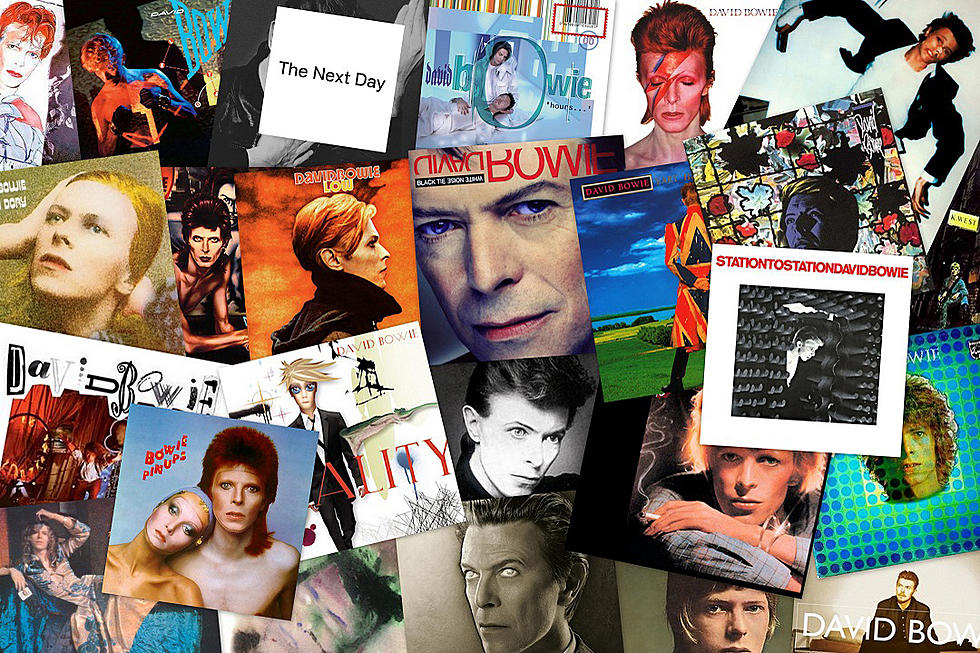
I’ve written before of my love of all things Bowie. Here’s my latest attempt to rank his 26 studio albums in reverse order.
26. David Bowie (1967). Easy to forget that the great man started his career as a purveyor of novelty pop, sounding like a cross between Anthony Newley and Tommy Steele. We’re meant to disparage this album as he did, but bits of it are good fun, notably Love You Till Tuesday. But it’s not the Bowie we came to revere.
25. Never Let Me Down (1987). H’mmm. He kind of did let us down at times in the mid-80s. Like all Bowie albums, this has its moments of inspiration, notably Time Will Crawl. The title track, Glass Spider and Zeroes are decent enough. But for much of it he is going through the motions in what he later called his ‘Phil Collins’ phase – trying to write for the mass market attracted by Let’s Dance rather than doing his own thing.
24. Tonight (1984). The follow-up to his biggest selling album, Let’s Dance, marked the beginning of his 80s mini-decline. Singles Blue Jean and Loving The Alien sound like the old Bowie, the rest is made up of mediocre covers and middling songs that wouldn’t have got near an earlier Bowie release.
23. Black Tie White Noise (1993). Some saw this as a return to form – and it’s better than the two above, with lead single Jump They Say the standout. Miracle Goodnight and the title track are fine Bowie songs and Pallas Athena certainly doesn’t sound like any of his other tracks. But it feels like a slight return to his mid-80s groove after his underrated Tin Machine experiment. The first of many to claim the title ‘best Bowie album since Scary Monsters‘ – it would not hold it for long.
22. Buddha of Suburbia (1993). Bowie’s ‘lost album’. Much closer to a return to form and initially written as a soundtrack for the Hanif Kureshi TV drama, the album got little publicity and was a commercial flop, with only the outstanding title track used in the series. But it’s an interesting, if uneven, listen: Bowie is experimenting again and turning out some fine tunes – Strangers When We Meet would reappear on his Outside album and some of the instrumental pieces recall his Berlin phase.
21. Pinups (1973). Cashing in on his rocketing fame post-Ziggy Stardust, Bowie turned out an album of covers, mainly songs he was listening to in the 60s. It has that iconic early Bowie sound and band and the choices are interesting, though not all improve on the originals. Sorrow is divine though and he makes a good stab at most of them, especially Friday On My Mind and Rosalyn. He’s definitely enjoying himself here.
20. Hours…(1999). Bowie found his mojo again in the 90s and this album ends the decade with him in decent form. Less experimental than the two albums before it (Outside and Earthling), it is nonetheless a reminder of Bowie’s ability to construct great tunes – notably Seven, Survive and Thursday’s Child.
19. Reality (2003). His last album before his long hiatus, Reality has some great moments without quite living up to its predecessor Heathen. Bring Me The Disco King, Never Get Old, The Loneliest Guy and Looking For Water are standouts. Hard too not to enjoy his covers of Try Some Buy Some and Pablo Picasso.
18. Earthling (1997). Bowie has done a drum and bass album? WTAF? Of course, as when Bowie takes on any genre, it becomes a cross between Bowie and the genre. Perhaps surprisingly, Earthling largely works: I’m Afraid Of Americans and Dead Man Walking are memorable singles and there is plenty here to enjoy. Above all, it is great to see Bowie doing what he likes again and not aiming for his 80s audience.
17. Outside (1995). The real return to form after the promise of Buddha. Meant to be the first of a Nathan Adler Diaries trilogy about an ‘art murder’, this showcases some of Bowie’s best songs since Let’s Dance. The weird talking segments don’t work for me and the album might score higher without them, but there are some mighty songs here. The Heart’s Filthy Lesson is magnificent and provided the perfect theme to the iconic move Seven. Outside, Hallo Spaceboy (much better here than in the watered down version with the Pet Shop Boys), I Have Not Been To Oxford Town and this version of Strangers When We Meet are all great Bowie songs.
16. Heathen (2002). Yet another ‘best since Scary Monsters’ , this Mercury Prize nominated album was deservedly well received. Back with his old producer Tony Visconti, Bowie is maybe not setting trends anymore but it’s a very good collection of songs. Slow Burn was nominated for a Grammy for best male rock vocal and Bowie’s cover of the Pixies’ Cactus is great, as is Slip Away. Everyone Says Hi and A Better Future are straight pop tunes and his cover of I Took A Trip On A Gemini Spaceship is great fun.
15. Lodger (1979). We’re among the Europa League contenders already. The third of Bowie’s Berlin trilogy is less radical than Low or Heroes, but Bowie tries on various new wave and art rock styles. Boys Keep Swinging is a stonking lead single, while Fantastic Voyage follows the same chord sequence in a slowed down, reflective musing on the cold war and fear of nuclear war. Repetition and DJ tell sad stories, while Move On and the swashbuckling Red Sails evoke a Bowie quote on his transient existence at the time: “I travel 100% of the time.” One curiosity: Red Money is basically the same song (with some of the same words) as Sister Midnight, cowritten by Bowie for Iggy Pop’s album The Idiot.
14. Let’s Dance (1983). Bowie’s most commercially successful album initially divided elements of his fan base, but history has been more than kind to it. The combination of Bowie and disco riff-maestro Nile Rodgers is a tremendous success. That huge intro to Let’s Dance, the clever reworking of Iggy and Bowie’s China Girl and the rumbustious Modern Love were an entirely new sound for Bowie. It may have marked the start of his 80s low point, but there is little evidence of decline here.
13. Young Americans (1975). One of Bowie’s most startling albums in that it marked a complete change to his earlier sound – a trend he would continue. Young Americans has been characterised as ‘white soul’ or ‘plastic soul’. As ever, though, when Bowie gets hold of a genre, he delivers his own interpretation of it. The title track and Fame are among his best tunes, Right is a relentless funk tune and his rampant version of Across The Universe lays in to the original – whereas a Zen-like Lennon felt nothing was going to change his world, a furious Bowie was not going to allow anything to change his.
12. Heroes (1977). Bowie was on fire in 1977, turning out this album, its groundbreaking predecessor Low and co-writing and producing two superb Iggy Pop albums. Heroes follows the same format as Low; an electro-rock first side and a largely instrumental. ambient second. The title track has become his most iconic song and just sweeps along majestically, Sons Of The Silent Age and Beauty And The Beast are fabulous, and instrumentals like Neukoln and Sense Of Doubt could add tension to any horror movie.
11. The Man Who Sold The World (1970). Undoubtedly Bowie’s rockiest album and the first outing for the band who would become The Spiders From Mars. Many Bowie fans would have this far higher, but we are now in Champions League territory with wall-to-wall classics all the way. The Man Who Sold The World is a brilliant mix of hard rock and sinister little ballads like After All. All The Madmen combines both in one song, while the sweeping The Width Of A Circle and The Supermen are Bowie at his most heavy in every sense. Saviour Machine is an early rock music take on the dangers of artificial intelligence. The title track is another iconic Bowie tune – and Lulu’s Bowie-produced cover is better than Nirvana’s.
10. David Bowie/Space Oddity (1969). The rebooted eponymous Bowie debut was later rebadged Space Oddity to avoid confusion with its less seminal predecessor. It’s not as celebrated as it should be. The title track is iconic and the starting point of the Bowie legend, but there is much else to admire here. The sound is reminiscent of Hunky Dory, with more stories. The epic Cygnet Committee is one of Bowie’s very finest songs and still somehow little known. The Wild Eyed Boy From Freecloud, Unwashed And Somewhat Slightly Dazed and Memory Of A Free Festival all deserve way more exposure, while the simply gorgeous Letter To Hermione is maybe the closest Bowie ever gets to a song about real heartbreak.
9. The Next Day (2013). OMG, he’s back! After ten years of silence, Bowie burst back on the scene with the beautiful Where Are We Now? and followed it with an album to rank with his greatest. Like Lodger, it’s a mix of styles, but better achieved. The Stars Are Out Tonight, Valentine’s Day and the almost Britpop I’d Rather Be High tell dark stories magnificently. You Feel So Lonely You Could Die feels like the Thin White Duke of the 70s is being tracked by an assassin, then closes with the iconic Five Years drum intro-outro. The ebullient title track charges out of the speakers: “Here I am, not quite dying!” and a generation of fans almost scream in delight. The self-referential cover – basically the Heroes cover with The Next Day overlaying it – makes the whole thing of a celebration of Bowie, past and present. A great and entirely unexpected return.
8. Low (1977). Many would have this at #1. It is a ground-breaking album, as seminal and influential a record as any pop star has ever made. Living in Berlin with Iggy Pop, Bowie stunned his record company with a first side of short electronic vignettes like Sound And Vision and Breaking Glass and a second side of what would later become known as ambient music, largely instrumental with phonetics and random phrases replacing words where there were any. The influence of German electronic bands like Kraftwerk and Neu! is clear, but once again Bowie, with Brian Eno, has created a new starting point, something that sounds like nothing else. It’s a far cry from his earlier material and must have alarmed his marketeers, but its influence since has been incalculable. Joy Division (originally called Warzawa after the Low track) and others would take up the mantle of what was pretty much a new genre.
7. Scary Monsters And Super Creeps (1980). The ‘best since Scary Monsters‘ claim exists for a reason: it’s Bowie in his absolute pomp. A huge influence on the sound of the burgeoning new romantic scene, it’s a tight, taut and inventive collection. Ashes To Ashes is an iconic Bowie song (and video), while Fashion, Scary Monsters and Up The Hill Backwards are among his most memorable tunes. There is even a slightly scathing takedown of what he saw as his imitators in Teenage Wildlife.
6. Blackstar (2016). Another that some would rank even higher, Bowie’s farewell is an extraordinary mix of jazz, R&B, art rock and pathos. Tony Visconti was the first to recognise that it was written as a farewell and it’s impossible not to be moved by the lyrics in Lazarus, Dollar Days and the remarkable title track, in which Bowie is clearly facing up to his imminent death. Where on earth this album came from is a mystery; it’s Bowie fusing genres and creating something unique and memorable as a parting gift. Rightly nominated for the Mercury Prize and should have walked it.
5. Station To Station (1976). At this stage in his life, Bowie was skeletal and slightly deranged, reportedly living on milk and cocaine, saying deeply weird things about Hitler and drawing pentagrams on his floor. It didn’t stop him producing one of his greatest works. Six epics: from the majestic title track to his beautiful cover of Wild Is The Wind. Golden Years is an all-time Bowie classic, Stay, Word On A Wing and hit single TVC15 build on the white soul and funk of Young Americans. The Krautrock influences that would shape the Berlin trilogy are fused with Young Americans here in one of Bowie’s best albums.
4. Diamond Dogs (1974). While it started life as a soundtrack to Orwell’s 1984 until Orwell’s estate intervened, Diamond Dogs turns into quite something else, a post holocaust dystopian nightmare. From Future Legend, it suggests a story that is not going to end well. Sweet Thing/Candidate is another Bowie epic that does not get the huge recognition it should as one of his finest, and it’s the centre-piece of this story. Rebel Rebel is as good a slice of Bowie rock pop as you will ever hear. The title track, the haunting We Are The Dead and the almost rock theatre Big Brother showcase a new, deeper-voiced, harder and more threatening sound. The last of his ‘glam’ albums but his voice is already evolving.
3. Aladdin Sane (1973). Bowie described Aladdin as essentially ‘Ziggy Stardust goes to America’ and most of it was written on tour in the US. Similar to its predecessor but with a slightly harder sound, it spawned a number of Bowie classics like The Jean Genie, Time, Drive-In Saturday and The Prettiest Star. There were more experimental moments too, in the avant-garde Lady Grinning Soul and the title track. Panic In Detroit is in some ways the ethos of the album: a great dose of Ziggy rock which Bowie said reflected his paranoia with America. Bowie looked unstoppable in this period and some regard it as his peak; it’s certainly one of them.
2. Hunky Dory (1971). In many ways the perfect David Bowie album and the perfect introduction to his brilliance. As a collection of songs it has rarely been bettered by anyone. Life On Mars has a case for being his best tune. Changes, Oh You Pretty Things, Quicksand and Queen Bitch are songs that would top most careers, Bowie produced them all in one glorious album, squeezed in pieces of joy like Kooks and Fill Your Heart, paid tribute to Dylan and took the piss out Of Warhol – finishing it all off with the stunning Bewlay Brothers. It’s a timeless album that continues to grace the upper reaches of many ‘best ever’ polls.
1. The Rise And Fall Of Ziggy Stardust And The Spiders From Mars (1972). Ziggy Stardust is the greatest pop record ever made. Everything about it is absolutely magnificent. The cover, the instruction ‘to be played at maximum volume’, the iconic voice, the band. The suggested story: we start with Five Years and end with Rock Roll Suicide – that pretty clearly tells you what happened to Ziggy. It just roars along from beginning to end; it still feels contemporary and uniquely moving 50 years on. It tells a story we have come to know, of the rock n roll star who outrages, burns brightly for a while and then burns out in tragedy. Bowie himself killed the character off live on stage, broke up the band and went off to cement his legend. The title track repeats the story the album suggests and the album keeps producing new high points: Five Years, Moonage Daydream, Starman, Lady Stardust, Suffragette City…and then Rock N Roll Suicide, for me Bowie’s greatest moment of all.
 Rory writes
That first ‘David Bowie’ album from 1967 should be much higher IMO. Better than ‘Let’s Dance’ for a start. But what a body of work!
LikeLike
I like it, but it doesn’t sound like Bowie to me – more like a good novelty pop record. I find a lot of Bowie fans underrate Let’s Dance, myself initially included – but on reappraisal, it’s a great record.
LikeLike
Maybe because LD was so ‘pop’ after a run of experimental albums? The title track was a wonderful pop/dance track in its own right though.
LikeLike
Yes, I think so. It was certainly seen as very commercial a t the time and teaming up with Nile Rodgers was a surprise. But there’s still some experimental stuff on there – Catpeople for example – and as you say, the title track is a stunner. I also have huge love for Modern Love.
LikeLiked by 1 person
Glad to see ‘Diamond Dogs’ up there. Often gets overlooked, falling between the breakthrough three of HD/Ziggy/Aladdin and the Berlin trilogy.
LikeLike
Agreed, Diamond Dogs is a truly great album that doesn’t quite get the credit it merits.
LikeLiked by 1 person