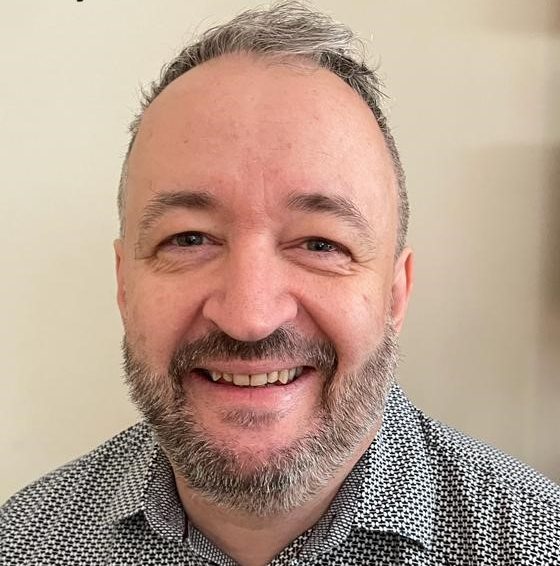
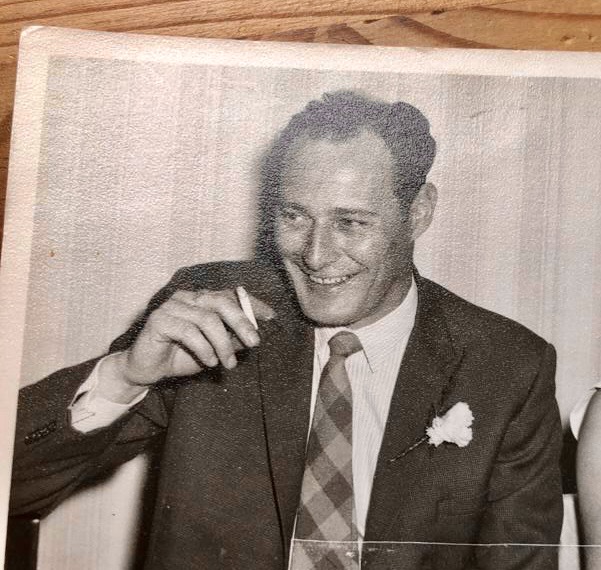
For the past 16 years, Father’s Day to me has been a day to celebrate my fabulous daughter; for the past 31, I have had no Dad to send a card or gifts to. My Dad died ridiculously young at 61 and never met his granddaughter. This obviously hurts me, as does the fact that he was gone before I really grew up and built an adult life for myself. I think he’d have been so interested in the jobs I ended up doing, the wonderful woman I married and how my life panned out. It is eminently possible to miss conversations you will never have.
Many years ago, I had aspirations of being a full-time author and even managed to con the Thatcher government into paying me an extra tenner a week to pretend to be a self-employed writer. It was actually more a case of them conning the country; the Enterprise Allowance Scheme was a shoddy attempt to cut the unemployment figures by rebranding us all as entrepreneurs. To pass the occasional visit by a presumably baffled Job Centre operative, I set up my office in my parents’ utility room, complete with old fashioned typewriter, sheaths of paper, notebooks and an air of utter self-delusion.
My father was a recently retired fireman when his son – replete with Brian May haircut and borderline laughable arrogance – decided he was now going to put his years of experience of next to nothing in to writing books and plays. My dad’s response veered between bewilderment and frustration – and occasional paranoia. One day, in a seeming fit of the latter, he came in and hesitantly asked me what I was writing about. “Oh, ” I said loftily. “I can’t share my ideas before I write them.” Instead of swearing and calling me a prick as he should have, he hesitated again. “What I don’t want is to come in here one day and read about ‘Life With Father’.” Yes, my Dad was taking me seriously enough to fear what everyone does when they think they’re talking to a writer – that they might write something disparaging about them. It was both an unjustified compliment to his deluded son and maybe a twitch of fear that I might one day share his eccentricities with the world.
I have written before about the unique experience of watching sport with my Dad and I’ve alluded to some of his foibles, of which there were many. But I always went back to that conversation in my pretend office when it came to writing about him. I have so many funny stories about him that have often got laughs, but I would hate to disrespect his memory by painting him in a derisory light, fulfilling his misplaced fear from all those years ago. My Dad was an unusual man, a genuine eccentric. But he was also a man of intelligence, wit, courage and charm. I would hate to reduce his life and personality to a series of amusing anecdotes. And I think that is why I have resisted writing more about him until now.
My Dad grew up in Antrim in the north of Ireland – which was at the time a sectarian mini-state where catholics like him were treated as second class citizens. There was tragedy in his early life: his father and baby brother died in the same week when my father was 4, leaving him as his widowed mother’s only child. I never met my paternal grandmother, but it sounds like she never stopped grieving, and this had a damaging impact on her relationship with her son. They endured an intense, difficult coexistence as he grew up; in his teens, girlfriends were made distinctly unwelcome and his early wage packets were handed over to his mother in full; his ‘allowance’ was often delayed, seemingly to sabotage his social plans.
As sectarian tensions began to intensify, there was pressure on young catholic boys to join the IRA. My Dad was a strong Irish nationalist and wanted an end to the Protestant dominance of all areas of life in Northern Ireland – but he didn’t want to join the IRA and he didn’t feel he could continue to live with his mother. In a rather unexpected step for a young Irish nationalist, he gave up training as a solicitor to join to the RAF. “People ask me how could you do that, but I just wanted to see the world. Then they sent me to Malaya and people started shooting at me.”
Fighting for the Brits in the Malayan civil war may not have been his aspiration, but my sense was he enjoyed both the discipline and camaraderie of military service, while sympathising with the anti-colonial cause of the guerrilla warriors who were trying to kill him. Fighting in a war and being subjected to the iron rules and regulations of military service might sound dreadful to many of us; it perhaps reflects the home life he had escaped that he tended to speak of those days with some nostalgia. After leaving the RAF, he retained his desire not to live in Ireland and instead headed to London.
His experience of the city was brief and unhappy. Trying to find accommodation, he approached a stranger and confessed he was lost. “Lost? In London?” the stranger snorted, and walked away in disgust. My Dad never forgave London or Londoners for that one rude man. He adopted the same strange and occasionally hilarious antipathy to ‘southerners’ as a single breed expressed by many of the natives of Halifax, the Yorkshire town where he settled.
Like many Irish people of his generation, my Dad found it easier to get work in the then thriving town than he had back home, where his community was often excluded from employment opportunities. He met my Mum while they were both working as bus conductors. But initially struggling to settle in England, he decided to return home permanently.
His brief return home was not a happy one: the Troubles had got much worse and his relationship with his mother remained challenging. One night, he was out drinking with friends when they were accosted by the notorious ‘B Specials’. The Special Ulster Constabulary, to give them their full name, were an armed ‘reserve force’ called up to support the RUC in times of emergency. The B Specials were exclusively Protestant and openly sectarian. On this particular night, they homed in on one of my father’s friends, accusing him of sticking his tongue out at them (the man had a tendency for his tongue to loll to the side when in his cups). As the questioning turned increasingly aggressive – and bear in mind these young men were all known to each other – my father lost his temper. He never went in to detail, but there were nine charges outstanding against him when he left Ireland a few days later, after writing to my Mum hastily retracting his advice to “find someone else”.
Settling permanently in Halifax, my Dad joined the Fire Service. His military experience was seen in those days as a plus and the service at the time provided a similar disciplined and hierarchical environment. He loved the job, though I know he saw some terrible things in the line of duty (one story sticks in my mind of pulling a man trapped in a car by his legs, only to find that the legs had detached from the man’s body). He rarely spoke of these experiences (my Mum told me that one) but a friend of his told me one night “I’ve seen your Dad do some incredibly brave things”. The fire service then did not have the breathing apparatus they do now and fires were way more common. My Dad and his colleagues were breathing in all sorts of toxic fumes: this and his chain smoking led to his emphysema, which in turn led to the embolism that killed him.
My parents’ relationship was often remarked upon as they seemed such a peculiar match. My Dad was a heavy drinker and smoker; my Mum was teetotal beyond a possible glass of Bailey’s at Christmas. Alcohol played too big a part in my father’s life and he lacked the financial discipline my Mum (or ‘the Chancellor’ as he called her) tried to impose. Their different outlooks, especially on drinking, caused occasional rows and sometimes hilarity.
One night I was lying in bed and thought I heard something hit my bedroom window. There it was again. It sounded like someone was throwing stones. I called my Mum, who was outraged. “It’ll be some hooligan!” she said, pulling back the curtains. “It’s your father!” she exclaimed, appalled.
On another occasion, she was lying in bed trying to sleep while wondering what on earth time my Dad would get back from the pub. She heard a tapping at her own window this time. She opened the curtains and screamed as my Dad’s smiling face loomed into view: for reasons unknown, he had climbed up on to the roof of our living room extension so he could surprise her at the window. Shaken and furious, she went downstairs to let him in, to find his socks neatly in his shoes on the doorstep and him struggling to navigate a way back down.
For a man with such strong views on Irish politics, it was something of a shock to my Dad (as it was to the neighbours) to end up living in a bright orange house. My Mum had ordered by post what she thought was a ‘russet’ colour for my Dad to paint the house. We were not well off, so once the can of paint was open, there was no replacing it with a different colour. As my Dad – who hated DIY as much as I do – started to slap the paint on the front of the house, he realised too late he was applying a lurid orange colour to the walls. I still recall my incensed father rage-painting his own house in a colour he despised. It was not remotely unobtrusive: you could soon see our house from the hills in Queensbury. Kids at school would ask if I lived in the “orange house”. The neighbours maintained a dignified silence and presumably made no attempt to sell their houses.
The fireman’s strike of 1977 changed my Dad. He was active in the Fire Brigades Union at the time and felt horribly let down by the then Labour Government. He felt real sadness and probably guilt at having to withdraw his labour and the strike fractured relationships with colleagues in the officers’ union, who crossed picket lines to work. They were on strike for nine weeks with no strike fund: as a family, we had no income and times were desperate as we relied on public donations and the support of my Mum’s church to survive. The experience scarred him and made him more cynical and mistrusting in later life.
He had a funny turn of phrase: his ‘life with father’ comment was very typical of how he spoke. He would often speak about himself in the third person – ‘father, ‘yer old Da’ and occasionally just ‘Seamus’. “Seamus will not be going,” was an occasional response to unwanted invitations.
My Dad was a shy man. He hated public speaking and I think this is why he didn’t follow a couple of former colleagues into the fire prevention service when approached after retirement. His reserved nature and dry, sarcastic sense of humour could be mistaken for rudeness – and to be honest, sometimes, it just was rudeness. “I have many acquaintances, but very few friends,” he often proudly told me. as if this was a code for living. Mistrust and suspicion sometimes clouded his perspective of people he didn’t know: occasionally he would take to individuals like my friend Paul Davis with genuine affection; other friends just felt the sharp edge of his sarcasm. His mistrust of others was such that I had to endure secondary school with my name, address and postcode emblazoned on the inside of my coat in indelible ink.
Equally, he was often incredibly kind and hospitable to people. He was known in the local pubs as a true gentleman and friends and neighbours remarked on his quiet warmth and charisma. His hospitality when hosting people for drinks actually bordered on aggression: “You will not sit with an empty glass in my house!” he would insist as he filled up their whiskey to tumbler level.
I’ve written in a previous blog about the extraordinary experience of watching sport with him – his weird bias against our own football team, his pretence of neutrality and his explosive responses to what was unfolding. He was anticipating a FIFA investigation when England beat Northern Ireland convincingly in a pre-World Cup friendly as the ref had been so obviously biased. “You disgraceful bastard!” was his conclusion. “Meaning you?” my sister asked, shocked – and while the referee was the object of his ire, it didn’t seem that far-fetched. Having a son supporting England must have been dispiriting to say the least.
When I first moved to London – finally getting my act together and going off to study Journalism – he solemnly shook my hand at the door. “Well,” he remarked to my tearful Mum, “That’s the last we’ll be seeing of him.” His experience of London all those years ago still resonated: he’d gone there after years of military service and a rude stranger had derailed him; he thought the capital would swallow me whole. In fact, London changed me for the better: I grew in confidence there almost by the day and it was only a recession in Journalism after I graduated that led to me moving back to West Yorkshire.
To his evident dismay, I was back on the self-employed train. I set up a regional current affairs and arts magazine with a couple of friends: it was stocked in WHSmith and burned brightly for one issue, selling more copies than expected. Then lack of advertising revenue and our utter financial naivete saw the money run out, the magazine fold and its founders landed with sizeable debt. I was back on the dole, living with friends in Leeds and applying desperately and unsuccessfully for jobs in an industry where most of the freelance work was now going to people who had previously been laid off. To say my father despaired of me at this point would be an under-statement.
He had been in poor health for some years. Along with his emphysema he had chronic spondylitis and his lifestyle didn’t help: he smoked constantly and drank too much (though slightly less than he once had). He had occasional trips to hospital for treatment; his GP told him he would lose his leg if he didn’t stop smoking. But the end was entirely unexpected. I woke with a hangover at my then girlfriend’s house to a call from my neighbour, telling me my Dad had been rushed into hospital and it “didn’t look good”. It wasn’t; the hospital was ten minutes from her house and he was dead when I got there.
The shock of my Dad – a huge figure in my life – suddenly not being there was devastating. My parents’ house felt empty without his formidable presence. I moved back in with my Mum and stayed there, working part time for the local MP, until I finally got a press office job in London five years later. My Mum found herself a widow at 57; she brilliantly built a new life and a new social circle, but her shock and grief at the time were all-encompassing.
That move to London in 1997 was the making of me; I built a successful career in communications, made lifelong friends, met my wife and now have a fantastic 16 year old daughter who I know my Dad would have adored. It would have been great for him to witness all this; the kind of work I do would have held real interest for him and it is a shame that while I was in my 20s when he died, he never really met the fully formed adult me.
My Dad always admired ‘characters’: he would speak warmly of any public figure he saw as quirky and amusing, especially in sport. And the man himself was absolutely a character: funny, charming, contrary and unique. As his friend and colleague said at his retirement party: “There will never be another Seamus Hegarty.”
I wish I could see him again and buy him a pint.
 Rory writes
I enjoyed reading that so very much Rory. We were so very fond of your dad. A true gentle Irish man. Thank you for sharing your story.
LikeLiked by 1 person
Thanks so much, he thought the world of you and your family – you were on the approved list!
LikeLike
A beautiful piece, Rory, thanks for sharing
LikeLike
Thank you David; very much appreciated.
LikeLike
Aw Roralds, this is great. I never met Seamus Alloysious but heard lots about him. I remember the night he died like it was yesterday. I remember his funeral.
A great character. Imagine a catholic painting their house orange of all colours!
Love to you and your family x
LikeLiked by 1 person
Fantastic tribute. I didn’t have the pleasure of meeting Seamus Alloysious but from what Naida has told me he had a very dry sense of humour. I remember well the day he died. I also remember his funeral. Love to you all.
LikeLike
Thanks Jacqui x
LikeLike
Thanks for sharing Rory. I feel as if I’ve met your Dad after reading this. How sad that he died so young. Beautifully written.
LikeLike
Thanks Michelle, really appreciate your comment.
LikeLike
I’ve just read this with a mix of sadness and hilarity. I can remember making a jibe about the RAF Police, I think it was ‘Is it true that when you come across a Snowdrop dog handler, the brains of the outfit are at the bottom end of the lead?’ I received the reply ‘Seamus is not amused’ although the flickering smile on his face, belied the comment. He also once gave me the sage advice ‘remain a bachelor, and bring your sons up the same way’
I’ll never forget being in your house on the night he died, I remember hugging Finola who was in tears and saying to her ‘You’ll always miss him, it’ll just get easier to bear the loss’
He was unique, and I’ll always have fond memories of him, especially his slightly sardonic smile whenever my mum had made some remark that he obviously disagreed with, but was too much of a gentleman to argue.
LikeLiked by 1 person